
On the Road to Revolution: A Georgia Trust Field Trip
In honor of the country’s 250th birthday, the Georgia Trust for Historic Preservation recently organized a day-long excursion through Georgia’s Revolutionary-era sites. The tour, hosted by Georgia Trust CEO Wright Mitchell, featured five locations associated with the state’s colonial history. Here are some highlights from our field trip.
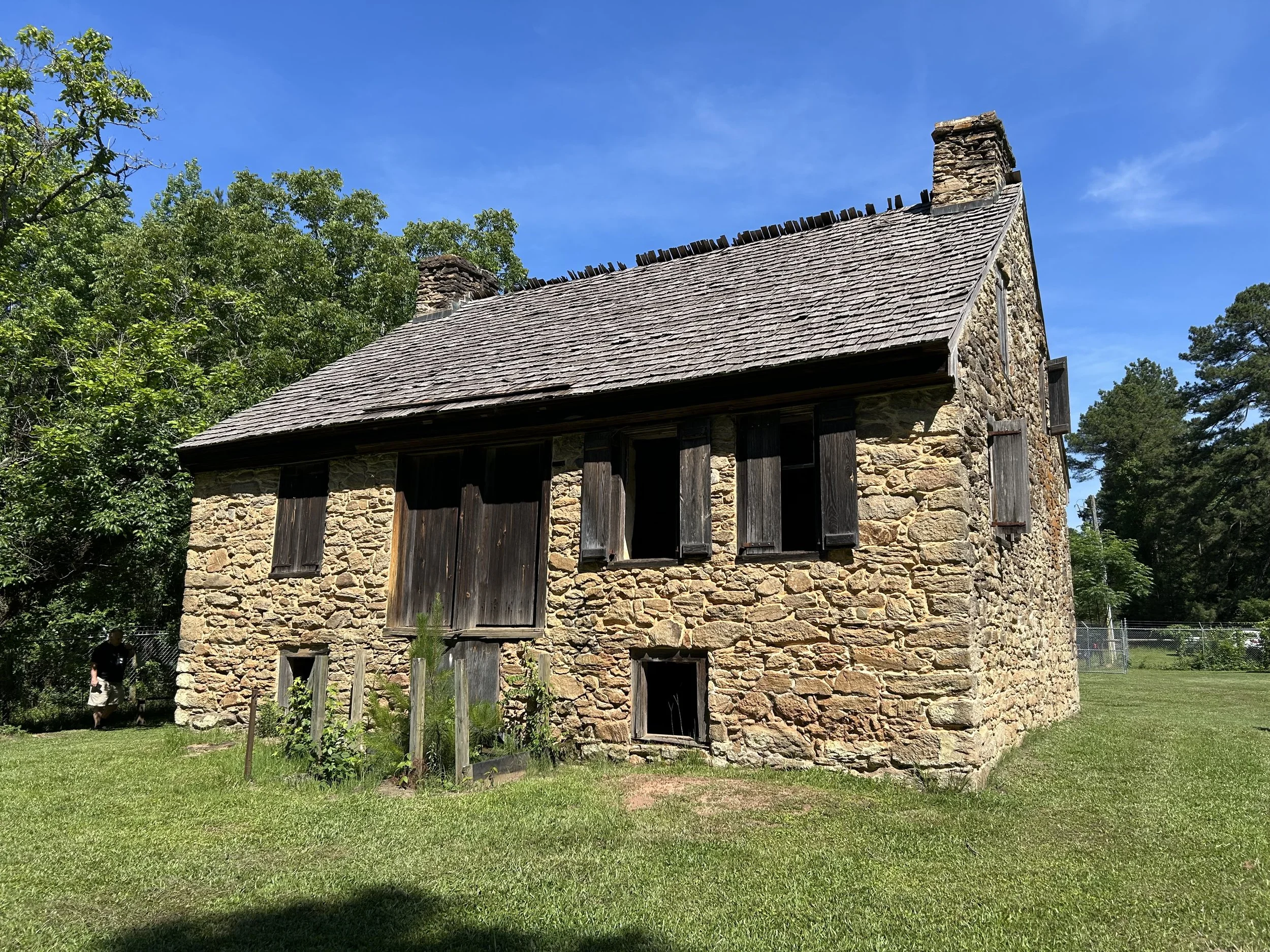
The Rock House: Constructed around 1795 by Thomas Ansley, the Rock House is one of the oldest stone houses in Georgia and one of the last remaining structures associated with Wrightsboro’s 18th-century Quaker community. Ansley, a Quaker and weaver, used weathered granite from a nearby geographical fall line, along with pine timbers — the design is similar to stone houses in the Delaware Valley, from which Ansley migrated. The Rock House is listed on the National Register of Historic Places and was once home to ancestors of President Jimmy Carter. Our tour group had a rare opportunity to walk the grounds and explore inside the home. We also heard from local historians and architects about the significance of The Rock House to both McDuffie County and Georgia overall.
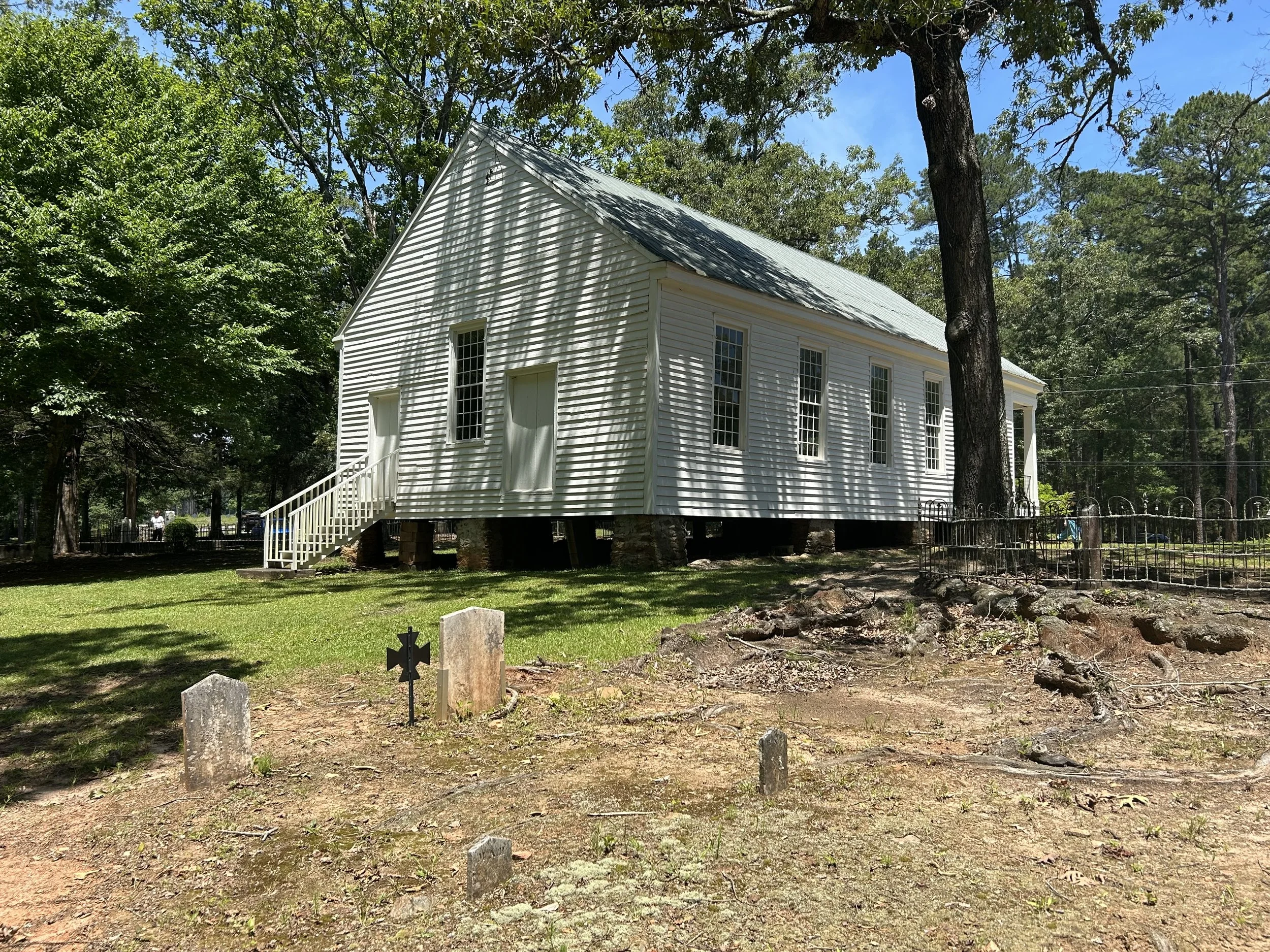
Historic Wrightsboro: The settlement of Wrightsboro dates back to 1768, when British Royal Governor of Georgia James Wright promised a Quaker community 12,000 acres of land near Thomson, Georgia. The Quaker families, who migrated from North Carolina following a schism in the Meeting, built homes, gristmills, and a meetinghouse in the area. Wrightsboro survived until the 1920s; however, the town ultimately failed due to economic devastation after the Civil War and the construction of railroad bypasses. All that remains of the settlement is the old Wrightsboro Church and cemetery, which were constructed in 1810. The area is open to the public by reservation only. Our group enjoyed a picnic lunch across from the church while local historian Epp Wilson spoke to us about the importance of preservation efforts.
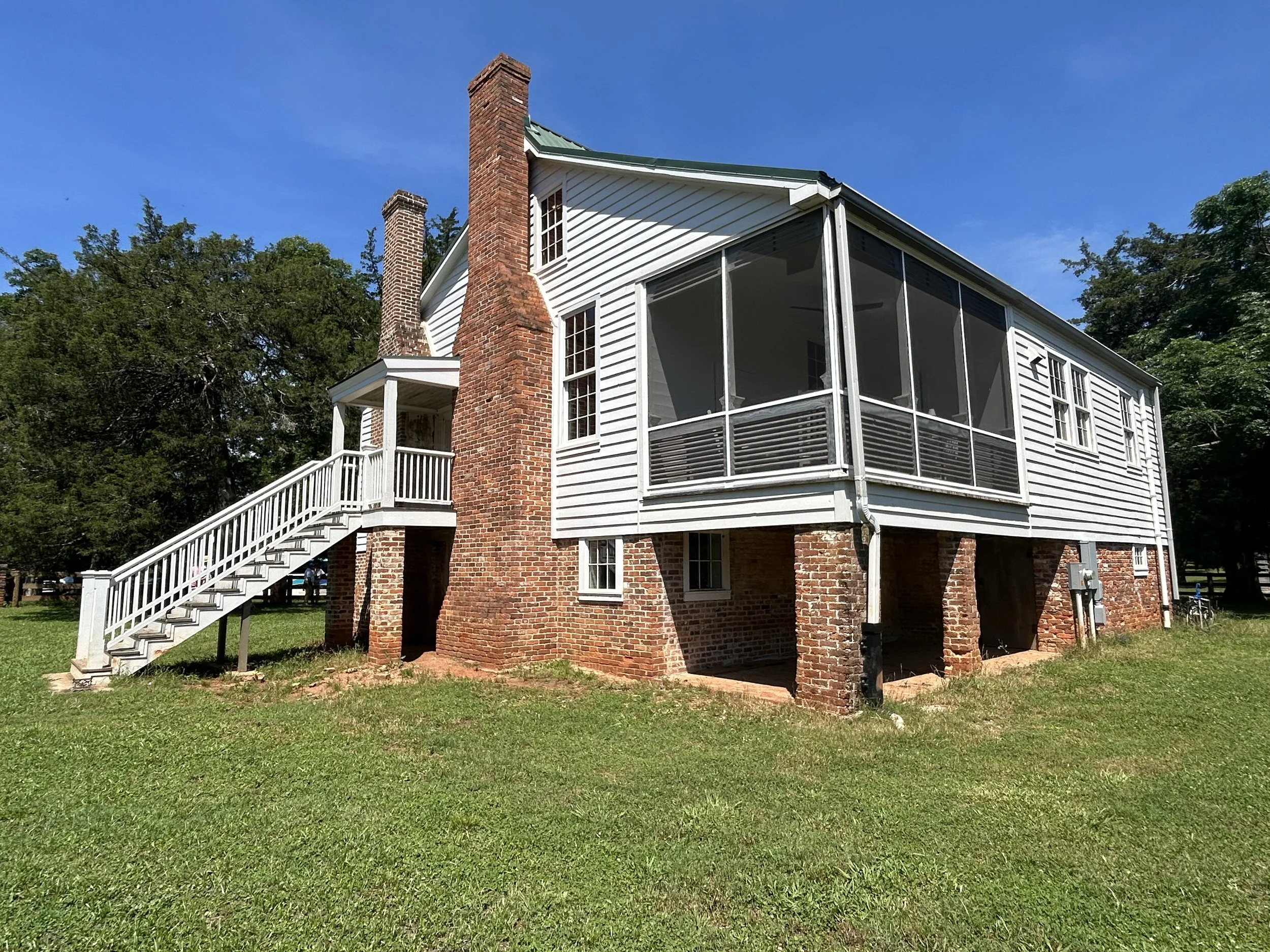
The Bowdre-Rees-Knox House: Thomas Bowdre, a successful Virginia farmer, emigrated to Thomson, Georgia, and, in 1806, built what would become the Bowdre-Rees-Knox House. Bowdre owned more than 1500 acres of land, and by 1827, enslaved more than 44 individuals on this working plantation. The house changed hands over the generations, with owners adding or modifying the raised cottage as needed. The Knox family purchased the house in 1907, and the property has remained in the family ever since. Locally, the home is known as the “Half Way House” for its central location on the Belle Meade Hunt Club’s fox run. The Club hosts scent hunts on the property and uses the house as an entertainment space during the hunting season. Ruth Knox, an attorney and 24th president of Wesleyan College, welcomed our tour group into her family home. We were also treated to local stories and a few blasts of the fox-hunting horn.
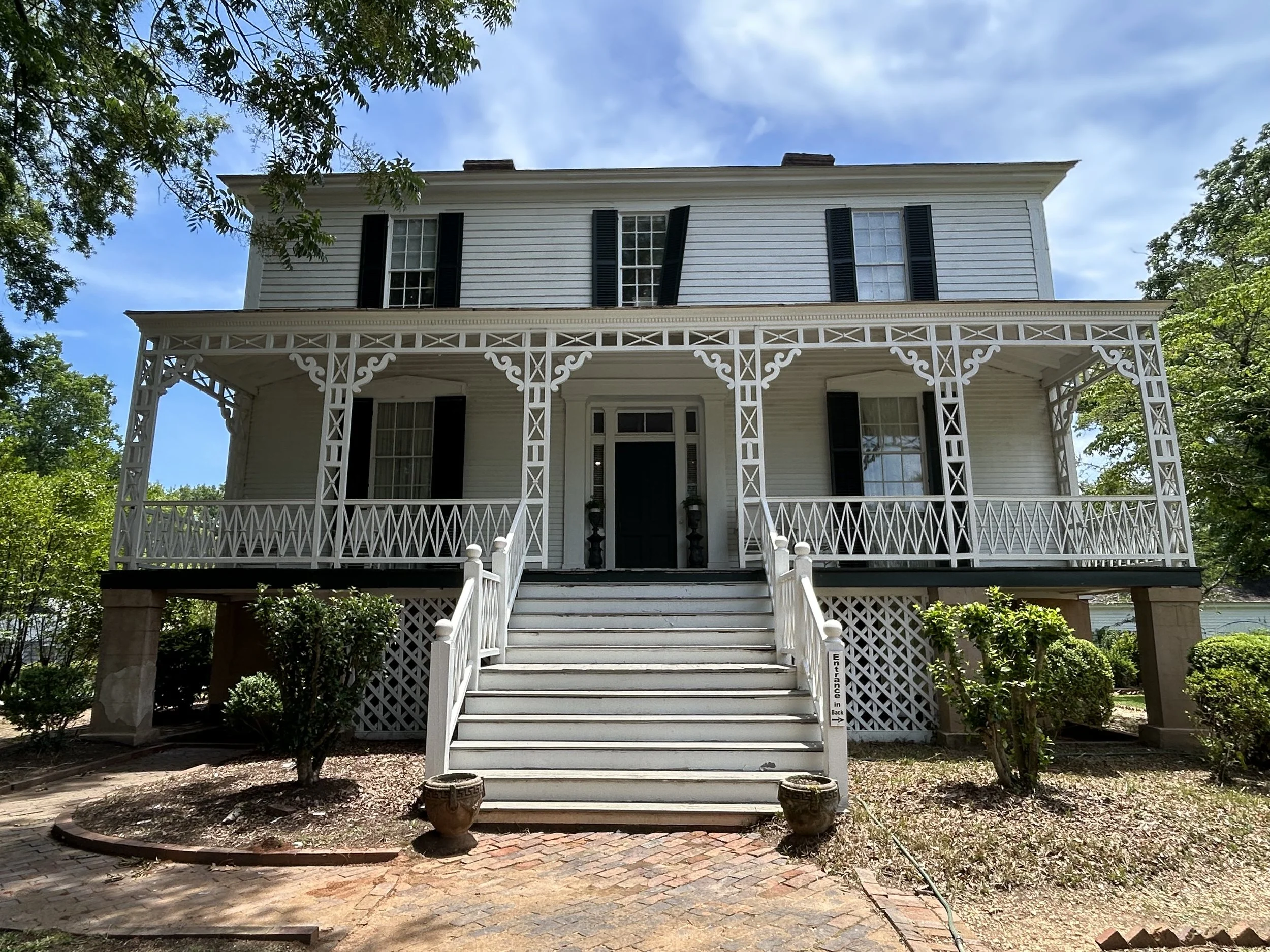
Washington (Georgia) Historical Museum: The marker outside of the Washington Historical Museum reads, “This museum shows the splendors of plantation life in Georgia before the War Between the States, displays relics, mementos and keepsakes of the era that tried men’s souls, and adds a fine collection of Indian relics for variety.” Originally constructed in 1835 by Albert Semmes on land owned by Revolutionary War hero Micajah Williamson, the museum houses artifacts representing more than 200 years of history in Washington and Wilkes County, Georgia. Colonial era antiques include pottery, an Eli Whitney Cotton Gin, and George Washington’s gravy boat. After viewing the various rooms and historical displays, museum executive director Stephanie Maccia walked our tour group through the Battle of Kettle Creek, its impact on Wilkes County, and its role in the Revolutionary War.
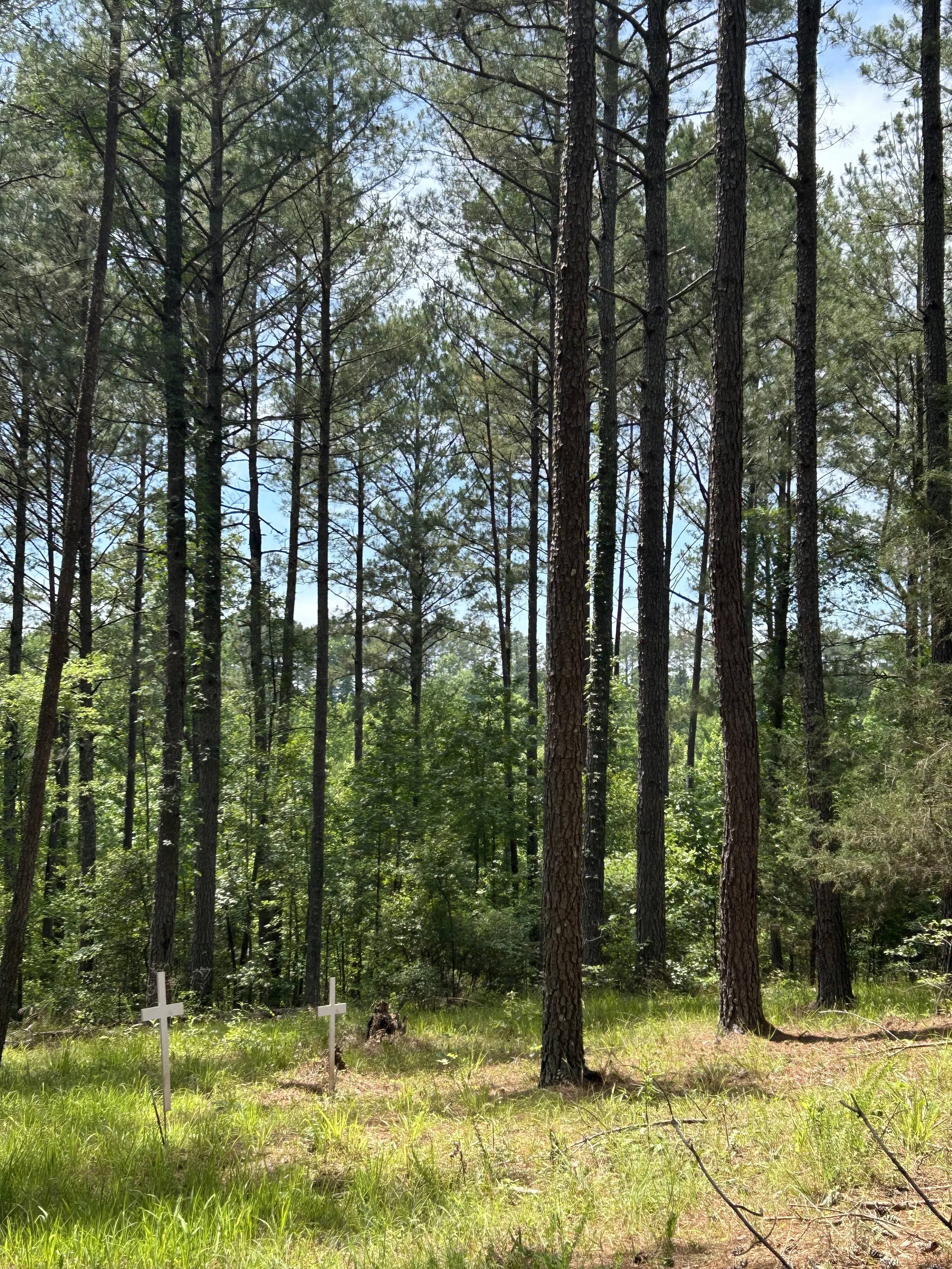
Kettle Creek Battlefield: On February 14, 1779, a force of 400 Patriots carried out a surprise attack on the Loyalists camped at Kettle Creek, defeating the British regiment and helping to break the stronghold that England had on Georgia. The Battle of Kettle Creek lasted four hours, with 21 Patriot and 115 Loyalist casualties. In 1900, the Daughters of the American Revolution purchased the 250-acre tract with hopes of developing it as an historic site. The Battlefield has since been added to the National Register of Historic Places and received National Park Service-affiliated status. On this last stop of our Revolutionary tour, a guide from the Kettle Creek Battlefield Association led us around Kettle Creek, describing the pivotal battle and identifying key locations along the “war hill.” We learned the significance of this victory in Georgia’s history and about the Association’s continued efforts to develop a battlefield recreational park.
If you are interested in Georgia’s role in the Revolutionary War and want to learn more, the Georgia Trust has created an ongoing video series that highlights historic sites associated with Georgia’s colonial and Revolutionary past. For more on the Georgia Trust and its upcoming tours, visit the organization’s event page.